
diff options
| author | altaf-creator <dev@altafcreator.com> | 2026-07-04 19:39:03 +0800 |
|---|---|---|
| committer | altaf-creator <dev@altafcreator.com> | 2026-07-04 19:39:03 +0800 |
| commit | 5d56fe7e8e93a6c5494cf49b34aed5736a91f358 (patch) | |
| tree | a701672faa48fd8de5a4b2beaf948ce9cb55c116 /data | |
| parent | 1506410ba767d280485edda008a244557736de67 (diff) | |
push blog urban0
Diffstat (limited to 'data')
| -rw-r--r-- | data/blogs.json | 5 | ||||
| -rw-r--r-- | data/blogs/urban0.md | 44 | ||||
| -rw-r--r-- | data/events.json | 3 | ||||
| -rw-r--r-- | data/events/foundersday.md | 15 | ||||
| -rw-r--r-- | data/events/noai.md | 2 | ||||
| -rw-r--r-- | data/events/temasekeng.md | 13 | ||||
| -rw-r--r-- | data/events/tinkertanker.md | 2 |
7 files changed, 68 insertions, 16 deletions
diff --git a/data/blogs.json b/data/blogs.json index bd657ec..df5e5af 100644 --- a/data/blogs.json +++ b/data/blogs.json @@ -14,6 +14,11 @@ "thumbnail": "/assets/images/blog/33_cover.png", "banner": "/assets/images/blog/33_banner.png", "path": "/data/blogs/1.md" + }, + { + "thumbnail": "https://files.altafcreator.com/media/good%20DJI_0827_sketch_small.png", + "banner": "", + "path": "/data/blogs/urban0.md" } ] } diff --git a/data/blogs/urban0.md b/data/blogs/urban0.md index a55ed47..9a18dcf 100644 --- a/data/blogs/urban0.md +++ b/data/blogs/urban0.md @@ -1,7 +1,7 @@ --- title: Reimagining Singapore's Streets with Design Thinking description: A secondary schooler's take on how we should design our streets. -date: Tue, 16 Jun 2026 +date: Sat, 4 Jul 2026 author: altaf-creator tags: - Blog @@ -17,12 +17,10 @@ View of Marine Parade Rd from footpath. Photograph taken by me. <i class="fa-bra This is a typical road that you may find in Singapore. Four 3.2 m to 3.5 m wide lanes lined with trees and 1.8 m wide footpaths. -The roads and streets of Singapore are widely acclaimed to be world-class. This is definitely true in an engineering perspective. As seen in the picture above, the lanes are nice, wide, smooth, and with clear road markings. Traffic flows smoothly, managed by relatively smart automated traffic lights. Roads are maintained regularly with advanced civil engineering technology to ensure the roads are always in pristine condition. +The roads and streets of Singapore are widely acclaimed to be world-class. This is definitely true in an engineering perspective. As seen in the picture above, the lanes are nice, wide, smooth, and with clear road markings. Traffic flows smoothly, managed by relatively smart automated traffic lights. Roads are maintained regularly with pretty advanced civil engineering tech to ensure the roads are always in pristine condition. The traffic engineering in Singapore is definitely world-class. However, I feel like Singapore has been building its streets too much in an engineering lens. -To be clear, the issue is not that traffic engineering is unimportant. Efficient traffic acts as the veins that keep Singapore alive. Without it, economic productivity and people's daily commute will be severely crippled. However, roads and streets are not built only to accommodate efficient traffic flow. - Streets inherently are spaces for humans. A street's function is more than connecting places to places. A street can be a place where people connect with each other. It can be a place where people discover new things around their neighbourhood. There is an inextricable social part in streets. When we ignore it, that is, when we design our streets purely in an engineering perspective (despite the name "traffic engineering"), we are reducing a street's functionality from a place for the community to merely a traffic conduit. <div class="shadow-filter" markdown="1"> @@ -31,11 +29,13 @@ Streets inherently are spaces for humans. A street's function is more than conne View of Bedok North St 1, a street near Bedok Town Centre and Heartbeat@Bedok. Despite being a Silver Zone, the carriageway is still fairly wide with 4 lanes of vehicular traffic. Photograph taken by me. <i class="fa-brands fa-creative-commons"></i><i class="fa-brands fa-creative-commons-by"></i><i class="fa-brands fa-creative-commons-sa"></i> CC-BY-SA 4.0 {: .img-caption } -This is what I feel like I'm seeing in Singapore. There are many instances where wide 4-lane roads are cutting through town centres of heartlands, despite being categorised as a local access road. Town centres are vibrant places bustling with activities and businesses. Regardless of people's background and age, these are places where people want to spend their time. Having wide roads cutting through it will make it harder for people to explore and find out about new businesses near that place. It may also be harder for residents living across the road to walk there, despite their close proximity, as wide roads for vehicles can act as a physical barrier that reduces permeability. Not only that, vehicles are polluting, and wide roads that facilitate vehicular movement will make the environment around it more uncomfortable to spend time in, which is contradictory to the characteristics of a town centre. +This is what I feel like I'm seeing in Singapore. There are many instances where wide 4-lane roads are cutting through town centres of heartlands, despite being categorised as a local access road. Town centres are vibrant places bustling with activities and businesses. Regardless of people's background and age, these are places where people want to spend their time. Having wide roads cutting through it will make it harder for people to explore and find out about new businesses near that place. It may also be harder for residents living across the road to walk there, despite their close proximity, as wide roads for vehicles can act as a physical barrier that reduces permeability. Not only that, vehicles are polluting, and wide roads that facilitate vehicular movement will make the environment around it more uncomfortable to spend time in, which is not what you want in a place for people to gather, like town centres. There are also the impacts on road safety. Conventional road design in Singapore often features wide and straight lanes in arterial roads and local streets. Drivers subconsciously associate these characteristics with faster driving, just like how they would drive in expressways, disregarding the speed limit of that street. In an unfortunate circumstance of a traffic accident, higher speeds will result in more fatal consequences. In fact, the risk of a pedestrian fatality increases exponentially with the collision speed[^1]. Places such as town centres should be a place where people can navigate freely with peace of mind, rather than a high-speed thoroughfare that compromises safety. -As of 2024, the road network in Singapore occupies 12% of Singapore's total land area[^2][^3]. This is a significant portion of land-scarce Singapore, even comparable to the total land area allocated for housing (14%)[^3]. Since road infrastructure in Singapore covers such a large area, making sure that we design our roads and streets correctly, that is designing roads that accommodates the needs of everyone, not just the flow of vehicles, is very important. Therefore, designing our roads and streets with empathy is crucial. +To be clear, the issue is not that traffic engineering is unimportant. Efficient traffic acts as the veins that keep Singapore alive. Without it, economic productivity and people's daily commute will be severely crippled. However, as we have established earlier, roads and streets shouldn't be built only to accommodate efficient traffic flow. + +As of 2024, the road network in Singapore occupies 12% of Singapore's total land area[^2][^3]. This is a significant portion of land-scarce Singapore, even comparable to the total land area allocated for housing (14%)[^3]. Since road infrastructure in Singapore covers such a large area, making sure that we design our roads and streets correctly, that is designing roads that accommodates the **needs of everyone**, not just the flow of vehicles, is very important. Therefore, designing our roads and streets with empathy is crucial. -+-+-+ @@ -47,6 +47,8 @@ This is where **design thinking** can come in. Design thinking generally refers to a human-centered methodology that designers can use to ensure that they solve problems by prioritising the needs of the users[^4]. There are numerous frameworks of design thinking out there, but they all generally have a common theme of listening and **empathising** to problems that a target audience faces, and focusing on solving them. For this post, I'll use a very common 5-staged design thinking framework. The stages include: empathise, define, ideate, prototype, and test. +Design thinking is often used in STEM contexts. A lot of technologies and products that engineers create ultimately exist to solve problems for people. Therefore, these same methodologies and principles are highly applicable to urban design and especially traffic engineering, to ensure that the needs of the people using our transport infrastructure are well-catered. + <div class="shadow-filter" markdown="1"> 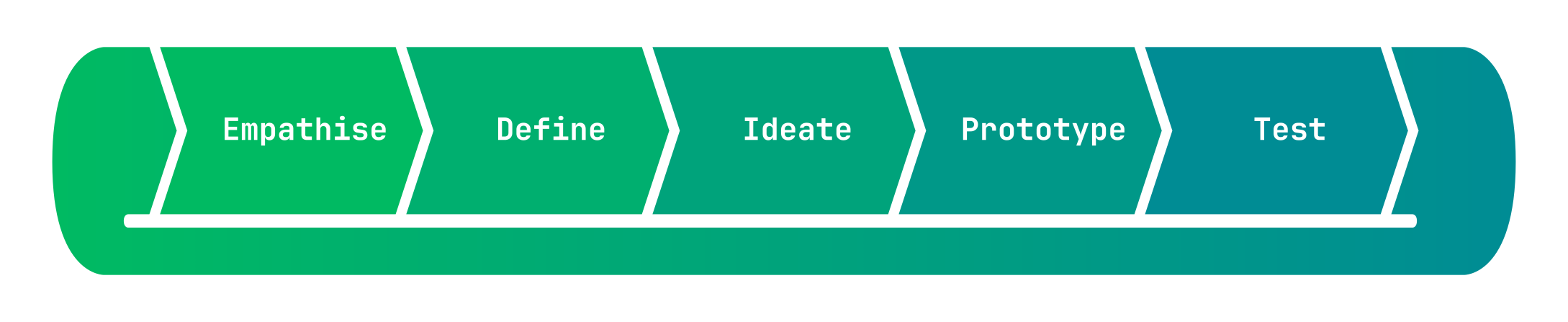 </div> @@ -81,6 +83,8 @@ Let's see how design thinking can be applied in road design to make it more huma ## Stage 1: Empathise +Let's take this street below as a demonstration. At this stage, we will try to understand the current problems this street has and the users' needs. + <div class="shadow-filter" markdown="1"> 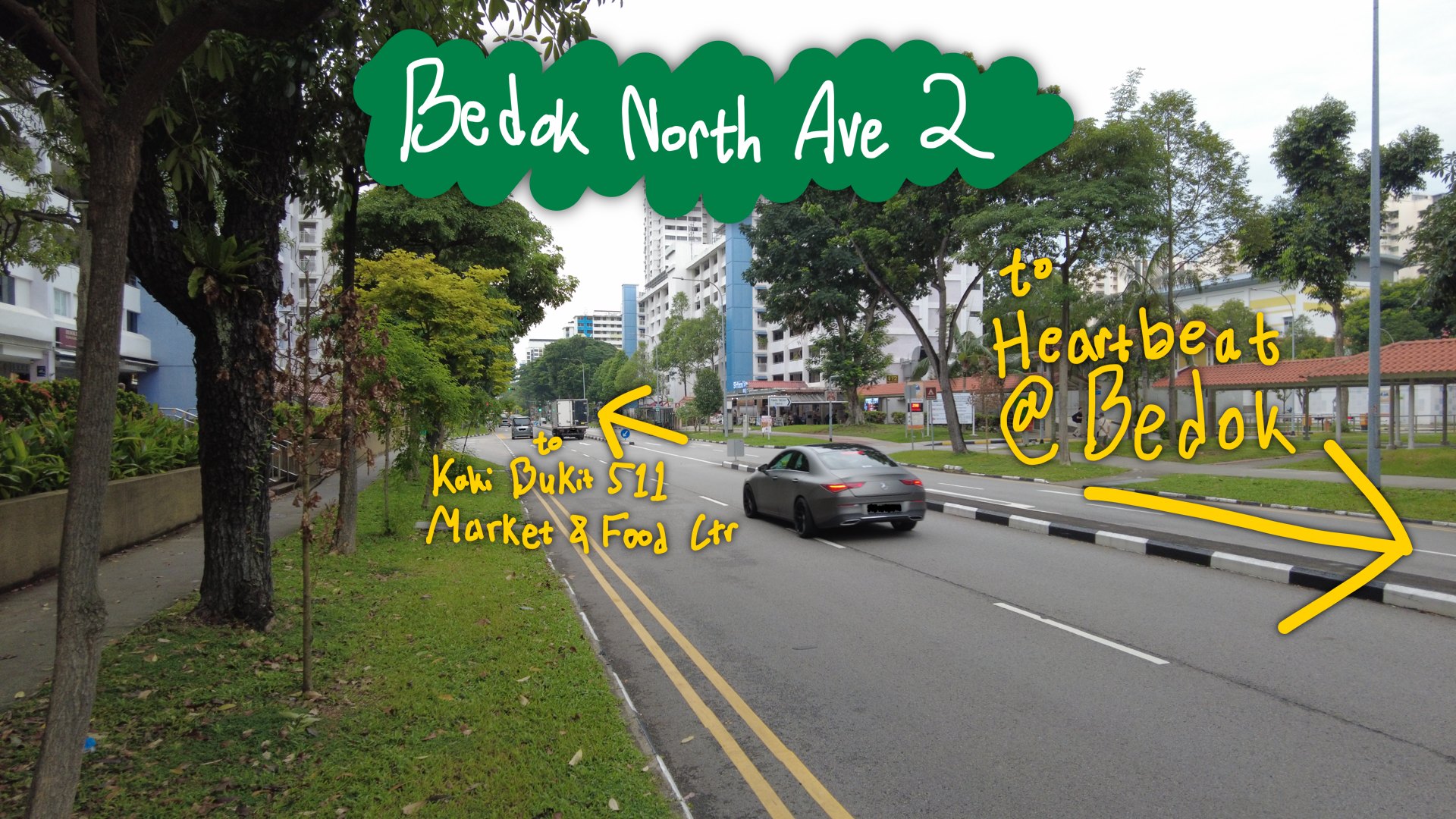 </div> @@ -91,7 +95,7 @@ Let's see how design thinking can be applied in road design to make it more huma Side and top view of Bedok North Ave 2. Photographs taken by me. <i class="fa-brands fa-creative-commons"></i><i class="fa-brands fa-creative-commons-by"></i><i class="fa-brands fa-creative-commons-sa"></i> CC-BY-SA 4.0 {: .img-caption } -This is Bedok North Ave 2, a street that serves Kaki Bukit neighbourhood centre at its northern end, numerous HDB precincts, and Heartbeat@Bedok at its southern end. Despite having "Avenue" in its name (which is usually reserved for Major Arterial/Category 2 roads), it is officially classified as a Category 4 road[^7], which means that it is a primary access road/street that provides access to developments[^8]. Despite being a local street though, it has a pretty wide and straight 4-lane carriageway (the portion of road for vehicular traffic), no bus lanes, footpaths on both sides, and a cycling path on only one side. +This is Bedok North Ave 2, a street that serves Kaki Bukit neighbourhood centre at its northern end, numerous HDB precincts, and Heartbeat@Bedok at its southern end. Despite having "Avenue" in its name (which is usually reserved for Major Arterial/Category 2 roads), it is officially classified as a Category 4 road[^7], which means that it is a primary access road/street that provides access to developments[^8]. Despite being a local street though, it has a pretty wide and straight 4-lane carriageway (the portion of road for vehicular traffic), no bus lanes, relatively narrow footpaths on both sides, and a cycling path on only one side. Being one of the first HDB towns built, Bedok is a mature estate, and in this particular neighbourhood, there is a higher number of elderly living here. I also often see high amounts of foot traffic along the footpaths since I cycle there often. Additionally, this route is a popular route for cyclists and PMD/PMA users to go to Bedok Town Centre, so there are also a lot of cyclists on this street. @@ -102,6 +106,8 @@ Lastly, this section of Bedok North Ave 2 between Bedok North Rd and its souther ## Stage 2: Define Considering these circumstances, carriageway being too wide, high number of cyclists and foot traffic, and high number of elderly residents living nearby, the current design of Bedok North Ave 2 may not be optimal for what it serves. Instead, Bedok North Ave 2 should prioritise safety for everyone, pedestrians, cyclists, and drivers included, and convenience of walking and cycling. + +Here, we have clearly defined the problem the current street has, and the mismatch between the current design and the users this street serves. We have also identified a solution, that is by redesigning the street with new priorities in mind. ## Stage 3: Ideate Let's try to improve this street by considering the priorities that we have identified. Just a quick but important note, I am by no means a qualified urban designer at all. I'm just a secondary school student that is interested in urbanism. The following example is most likely not a great example by any form of professional standards. I do still think it is an improvement, so perhaps just take the following example as a proof of concept instead. @@ -151,9 +157,11 @@ Also, our concept only redistributes street space, without needing to acquire ad 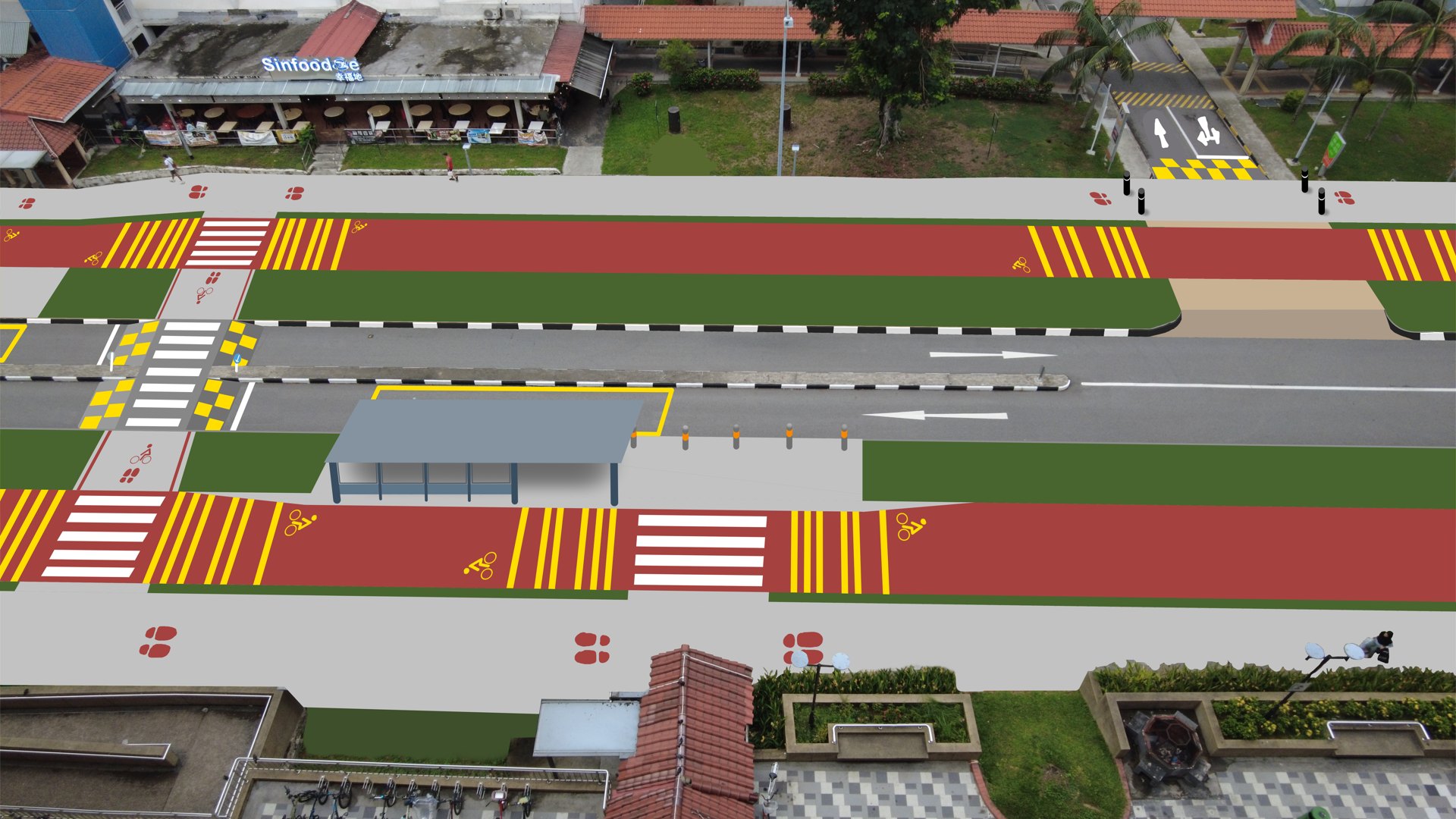 </div> -Tada! A sketch of our Bedok North Ave 2 redesign concept. Illustration by me.<i class="fa-brands fa-creative-commons"></i><i class="fa-brands fa-creative-commons-by"></i><i class="fa-brands fa-creative-commons-sa"></i> CC-BY-SA 4.0 +A sketch of our Bedok North Ave 2 redesign concept. Illustration by me.<i class="fa-brands fa-creative-commons"></i><i class="fa-brands fa-creative-commons-by"></i><i class="fa-brands fa-creative-commons-sa"></i> CC-BY-SA 4.0 {: .img-caption } +Tada! + And again, it is important to note that this redesign is intended just as a concept rather than a formal proposal. As a secondary school student, I do not have access to real-world data such as traffic volumes, bus service operations, emergency vehicle requirements, and other important data that should be put into consideration. As such, as you might have already noticed, this redesign idea has been developed primarily from existing road conditions and personal observations that may not fully reflect the whole picture. Nevertheless, I still hope that this idea serves as an example of how we can apply design thinking principles to design streets that are safer, more inclusive, and better suited to everyone's needs. ## Stage 4 & 5: Prototyping and Testing @@ -189,17 +197,27 @@ For instance, LTA has completed several [road repurposing](https://www.lta.gov.s Land Transport Masterplan, or LTMP for short, are long-term plans by LTA that includes the vision, policies, and targets of Singapore's land transport. Very recently, LTA underwent a nation-wide public consultation for the [Land Transport Master Plan Refresh](https://www.lta.gov.sg/content/ltagov/en/who_we_are/our_work/land_transport_master_plan_refresh.html) in late 2025 and early 2026. Those recent consultations were organised for the next edition of LTA's LTMP, the [Land Transport Master Plan 2040](https://www.lta.gov.sg/content/ltagov/en/who_we_are/our_work/land_transport_master_plan_2040.html), or LTMP 2040 for short. For the upcoming masterplan, LTA is "envisioning a more inclusive and gracious" land transport for Singapore, which is quite promising. -LTA has recently published the compiled insights from numerous focus group discussions they held during the recent public consultation phase, in which you can view it for yourselves [here](https://www.lta.gov.sg/content/dam/ltagov/who_we_are/our_work/LTMP/Image/Compiled%20Focus%20Group%20Insight.pdf)! Some of the main talking points from these focus group discussions, as reported by LTA were strong support for people-centric transport infrastructure. This includes better public transport connectivity, reliability, speed, and comfort, more mobility options such as walking and cycling, slowing down vehicle speeds in neighbourhoods, increased safety, and a lot more[^15]. - -This form of public engagement is also a form of application of design thinking! +LTA has recently published a compilation of insights from numerous focus group discussions they held during the recent public consultation phase, in which you can view it for yourselves [here](https://www.lta.gov.sg/content/dam/ltagov/who_we_are/our_work/LTMP/Image/Compiled%20Focus%20Group%20Insight.pdf)! Some of the main talking points from these focus group discussions, as reported by LTA were strong support for people-centric transport infrastructure. This includes better public transport connectivity, reliability, speed, and comfort, more mobility options such as walking and cycling, slowing down vehicle speeds in neighbourhoods, increased safety, and a lot more[^15]. Generally, all of the talking points here boils down to making the roads and streets, and more broadly, the transport system of Singapore more inclusive. -Oh shit I need to end this too. +This form of public engagement is also an application of design thinking! Empathy is a cornerstone of design thinking, which is also the main principle of designing inclusive environments. By listening to the voices of the people directly, LTA is engaging in the empathy stage of design thinking too, and this gives them a better and more accurate picture of transport users' pain points. In the near future, if LTA considers these feedback to improve and overhaul their current road design standards, this could lead to some really major changes in how Singapore's transport system and environment will be built. -+-+-+ +=+=+= -Hello there! Introduce yourself. +In a lot of contexts, engineering and empathy are **not** opposing philosophies. In fact, engineering becomes most meaningful when it begins with empathy and understands the people it is designed to serve. + +An expressway is essential for the movement of vehicles, goods, and services, but streets are places where people spend their time in to connect with their neighbourhood. They serve very different purposes, and therefore, they should be designed differently. + +The challenge, then, is not choosing between vehicle efficiency and creating destinations for humans. Instead, the challenge is understanding the important context of each street and designing it to serve everyone who uses it. + +# Afterword + +Hello there! I'm Altaf, an Indonesian secondary school student studying in Singapore. Mainly a hobbyist software, game developer, and videographer, I recently became really interested in urban design and urban planning. Funnily enough, I think this interest grew from [simpliCity](/projects/simpliCity), my current major game project, as I've done quite a number of research on urbanism topics to make my game more realistic. + +This is my very first urbanism blog I wrote. I've always wanted to create something about my growing interest in urbanism, so it was really fun to research and write this blog. If you want to see more of these kind of things, well, I don't have more of these as of now, but you can stay tuned to my future [blog](/blog)s! If you want to see other things that I create, you can browse around this website or look at some of my [projects](/projects/). + +Thank you and have a nice day! -+-+-+ diff --git a/data/events.json b/data/events.json index 27c7d73..144c6f9 100644 --- a/data/events.json +++ b/data/events.json @@ -16,5 +16,8 @@ }, "temasekeng": { "path": "/data/events/temasekeng.md" + }, + "foundersday": { + "path": "/data/events/foundersday.md" } } diff --git a/data/events/foundersday.md b/data/events/foundersday.md index e69de29..c592016 100644 --- a/data/events/foundersday.md +++ b/data/events/foundersday.md @@ -0,0 +1,15 @@ +--- +title: Founder's Day Certificate of Merit for Computing +type: Achievement +--- + + ++-+-+- + +[← Return to About Me](/about/) + +# Founder's Day Certificate of Merit for Computing {: .heading } + +Hello, world! + +-+-+-+
\ No newline at end of file diff --git a/data/events/noai.md b/data/events/noai.md index 2af4ba1..0a3e4e0 100644 --- a/data/events/noai.md +++ b/data/events/noai.md @@ -8,7 +8,7 @@ type: Achievement # National Olympiad in Artificial Intelligence 2026 { .heading } {{{ -<div id="flex-300"> +<div class="flex-300"> <img alt="Screenshot of my JupyterLab AI notebook thingy" src="/assets/images/education/events/ai_jupyter.png" style="max-width: 100%"> </div> diff --git a/data/events/temasekeng.md b/data/events/temasekeng.md index e69de29..d2a8ac5 100644 --- a/data/events/temasekeng.md +++ b/data/events/temasekeng.md @@ -0,0 +1,13 @@ +--- +title: Temasek Engineering Olympiad 2026 +type: Achievement +--- ++-+-+- + +[← Return to About Me](/about/) + +# Temasek Engineering Olympiad 2026 {: .heading } + +Hello, world! + +-+-+-+
\ No newline at end of file diff --git a/data/events/tinkertanker.md b/data/events/tinkertanker.md index 4acc7f2..c035de3 100644 --- a/data/events/tinkertanker.md +++ b/data/events/tinkertanker.md @@ -25,8 +25,6 @@ In November 2025, a couple of my friends and I was granted the opportunity from # Personal Reflections - - ## Taking the Initiative This internship has shown me that you should take the initiative more, especially if your intention is to improve something or help others. |